
Grow without growing your team
One dedicated pilot, on site one day a week for six months, prioritizes and ships the projects your team never gets to.

















The projects that would make the difference are usually the ones that never happen.
A growing company accumulates the same known-but-never-tackled projects: a CRM to set up, reporting to make reliable, manual tasks to automate. Nobody has the time or the energy to carry them.
of French SMEs tested generative AI in late 2025 — but only 8% use it regularly. The rest stall at generic, off-the-shelf tools.
01 · Operational emergencies always come first
The structural project has no real deadline, so it slips a quarter at a time.
02 · Parallel projects move too slowly
Five efforts at 20% each produce no result — everything stuck at prototype stage.
03 · Different solutions stay siloed and expensive
One vendor and one invoice per project, no shared view, no reuse.
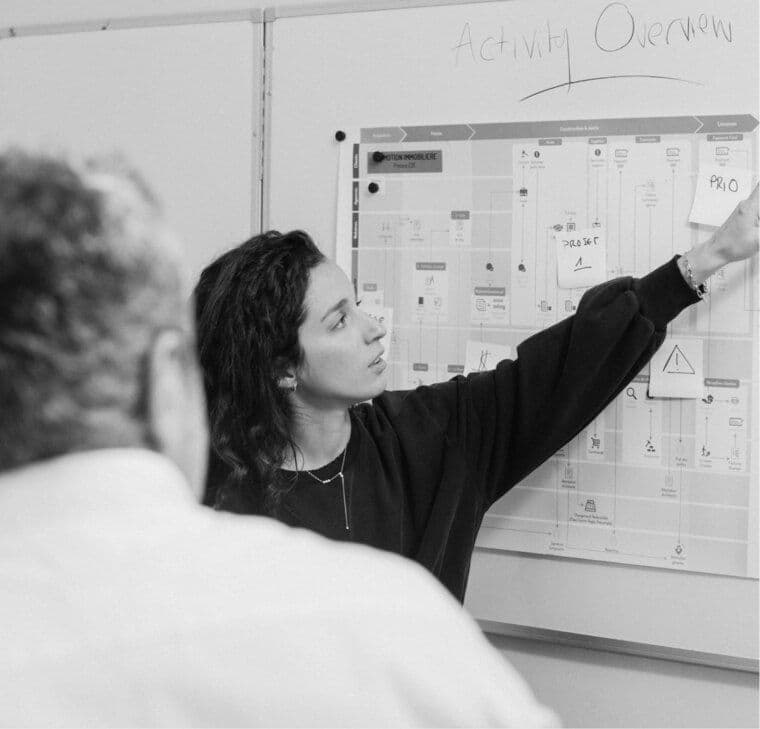
Structural projects, not patches.
We put in place structural projects that let you grow — and better management across the domains we're good at: tech, automation, data, acquisition and steering.
What that means in practice
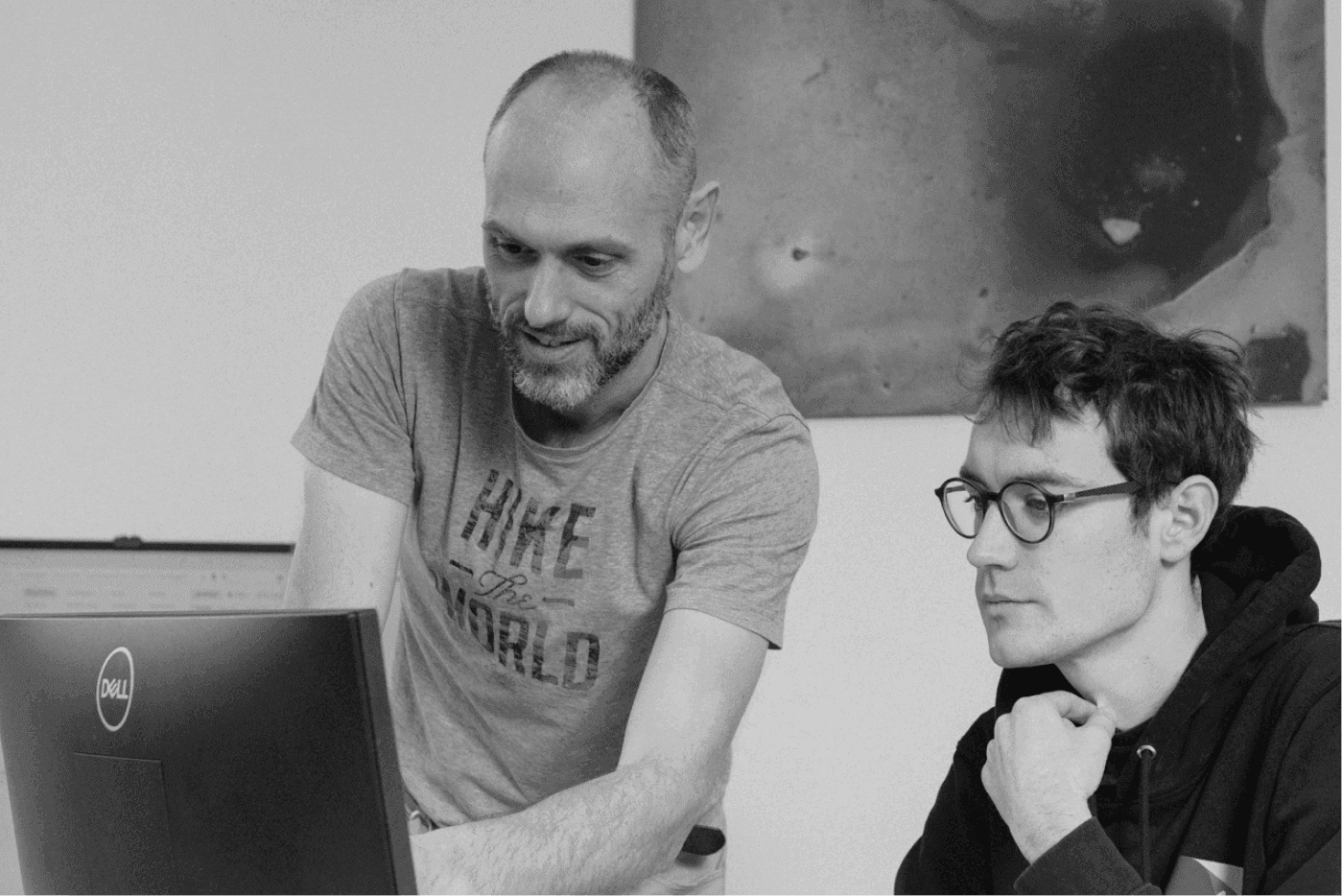
One person on site, a whole team behind them.
Every domain we're not already the best at, we bring in from the wider 26lights collective — 15 profiles across tech, marketing and business, on call behind the one person you see every week.
The collective behind your pilot
What you're actually buying
Growth architect
Strategy and roadmap, built with our method.
Growth Pilot
Hands-on steering, a few days a week — the one point of contact for the owner.
Tech Lead & Marketing Lead
Delivery: building the tools, the automations and the AI agents.
No extra load on your current delivery teams — the pool keeps running exactly as it does today.
Growth Pilot
One day a week on site, a 6-month commitment, one single point of contact with the 26lights team behind them — to get every project moving in priority order.
Prioritization
Projects are ranked with you, and re-ranked whenever reality changes.
Development
The top project moves forward every week, until it's in production.
Project management
Analysis, scoping, follow-up and trade-offs. You don't have to run the technical side.
On site
One day a week in your offices, available to your teams.
Map it, prioritize it, ship it, hand it off.
Map the business
Half a day with your teams to get the whole activity on one page: processes, tools, friction points.
Prioritize the projects
Expected gain against effort to implement — quick wins on one side, deeper structural work on the other.
Ship several projects in parallel
Priority projects move forward in parallel, each at its own pace, with a check-in at every milestone.
Make your teams self-sufficient
Documentation, training, and the maintenance model — chosen upfront, before the first project ships.

Where a structural project changes your day-to-day.
The domains we tackle are the ones your scoping workshop surfaces.
Setting up a CRM, building a prospect and client database, inbound marketing, and GEO / SEA and LinkedIn acquisition.
Automated invoice follow-up, financial reporting, profitability per project or client, and cash-flow tracking.
Automating repetitive tasks, integrating your existing tools, supervised day-to-day use of AI, and making your data reliable.
Planning, timesheets and task management, budget tracking and client reporting, and leadership dashboards.
Time freed up, and more deals in the pipeline.
Two axes, quantified with your own numbers at scoping time — the number of people involved, time currently spent, internal cost.
Days back, every month
Hours recovered from reminders, re-entry and reporting don't disappear — they go back into higher-value work. Multiplied across the people involved, the gain is measured in days per month.
Deals you don't see today
A CRM, a prospect database, inbound and paid acquisition surface deals you don't see today. Every new recurring deal adds to the time saved — it doesn't replace it.
15 years, 200+ startups, scale-ups and SMEs, in France and Belgium
We already do this — we just hadn't named it.
“Growth Pilot isn't a new skill we had to build — it's a name for what we already know how to deliver.”
Frequently asked questions
What is a Growth Pilot?
A Growth Pilot is a senior 26lights profile embedded regularly in your company to identify and execute high-impact improvements across operations, sales, marketing, finance and technology.
Instead of starting with a predetermined solution, we continuously look at the business and ask: what is currently limiting growth, and what is the most pragmatic way to remove that constraint?
The answer can be organizational, technical, commercial or a combination of all three.
What does a typical Growth Pilot engagement look like?
A common format is approximately one day on site at regular intervals over several months.
You have one main 26lights contact who understands the company and can pull in specialists from our engineering, product, business and marketing teams when necessary.
This avoids hiring a different consultant for every problem while keeping access to specialized expertise.
Does a Growth Pilot replace our current team?
No.
The objective is usually the opposite: make the existing organization more effective.
We can structure processes, automate repetitive work, improve the information system, unblock technical decisions or introduce new acquisition mechanisms while your existing team continues operating the business.
Whenever possible, we also transfer knowledge internally so the company becomes less dependent on external support over time.
How do you decide what to work on first?
We build a map of opportunities and prioritize them according to business impact, effort, urgency and dependencies.
That roadmap is deliberately not frozen for six months. If the company changes, a new bottleneck appears or an opportunity becomes more valuable, priorities change with it.
We optimize for business outcomes rather than for completing a predetermined list of projects.
What kinds of projects can a Growth Pilot cover?
Typical examples include:
- CRM and sales processes
- reporting and management dashboards
- invoicing and finance workflows
- AI and automation
- internal information systems
- planning and resource management
- lead generation and acquisition
- marketing operations
- ERP configuration
- connections between existing tools
The common thread is not the technology used. It is removing operational friction that prevents the business from scaling.
What happens when the engagement ends?
There are several possibilities.
The company may already be autonomous, the engagement may continue at a lower frequency, or responsibility may be transferred to an internal employee or a new recruit.
From the beginning, we try to build systems the company can own rather than creating unnecessary long-term dependence on 26lights.
Ready to get your projects moving?